Rubber ages whether you drive on it or not. A ten-year-old tire with full tread is not a bargain — here is how to read the date code stamped on your sidewall.
Tread depth is the measurement everyone knows about. It is not the only one that retires a tire.
Rubber is a chemical compound, and it degrades on a clock as well as under a car. A tire with 8/32" of tread and a 2014 date code is not a good tire that happens to be old. It is an old tire.
How to read the date code
Every tire sold in the US carries a DOT code on the sidewall. The last four digits are the ones that matter.
They are week and year. So 3219 means the 32nd week of 2019 — early August 2019. 0523 is the 5th week of 2023.
Two things catch people out. The full DOT code is often only stamped on one side of the tire, so if you cannot find it, look at the inboard face. And the four-digit format has been standard since 2000; a three-digit code means the tire was made in the 1990s and should have come off the car a long time ago.
What actually happens to old rubber
Tire rubber contains oils and antioxidants that keep it flexible and resist cracking. Those compounds migrate out and break down over time, accelerated by heat, sunlight, ozone and simply sitting still.
As they go, the rubber hardens. A hard tire has less grip, especially in the wet and cold, and it becomes more prone to the belts separating from the carcass. Belt separation is the failure mode that matters, because it tends to happen at highway speed with no warning.
Flexing a tire by driving it actually helps distribute those oils. That is the uncomfortable irony: the low-mileage car that sits in a garage is often the one with the most dangerously aged tires.
The numbers worth using
There is no federal expiry rule in the US, and tire manufacturers word their guidance carefully. The consistent industry positions are:
- Six years from the date code is when to start inspecting seriously each year
- Ten years is the outside limit, after which most manufacturers recommend replacement regardless of appearance or tread
- Several vehicle manufacturers put the number at six years flat in their owner's manuals
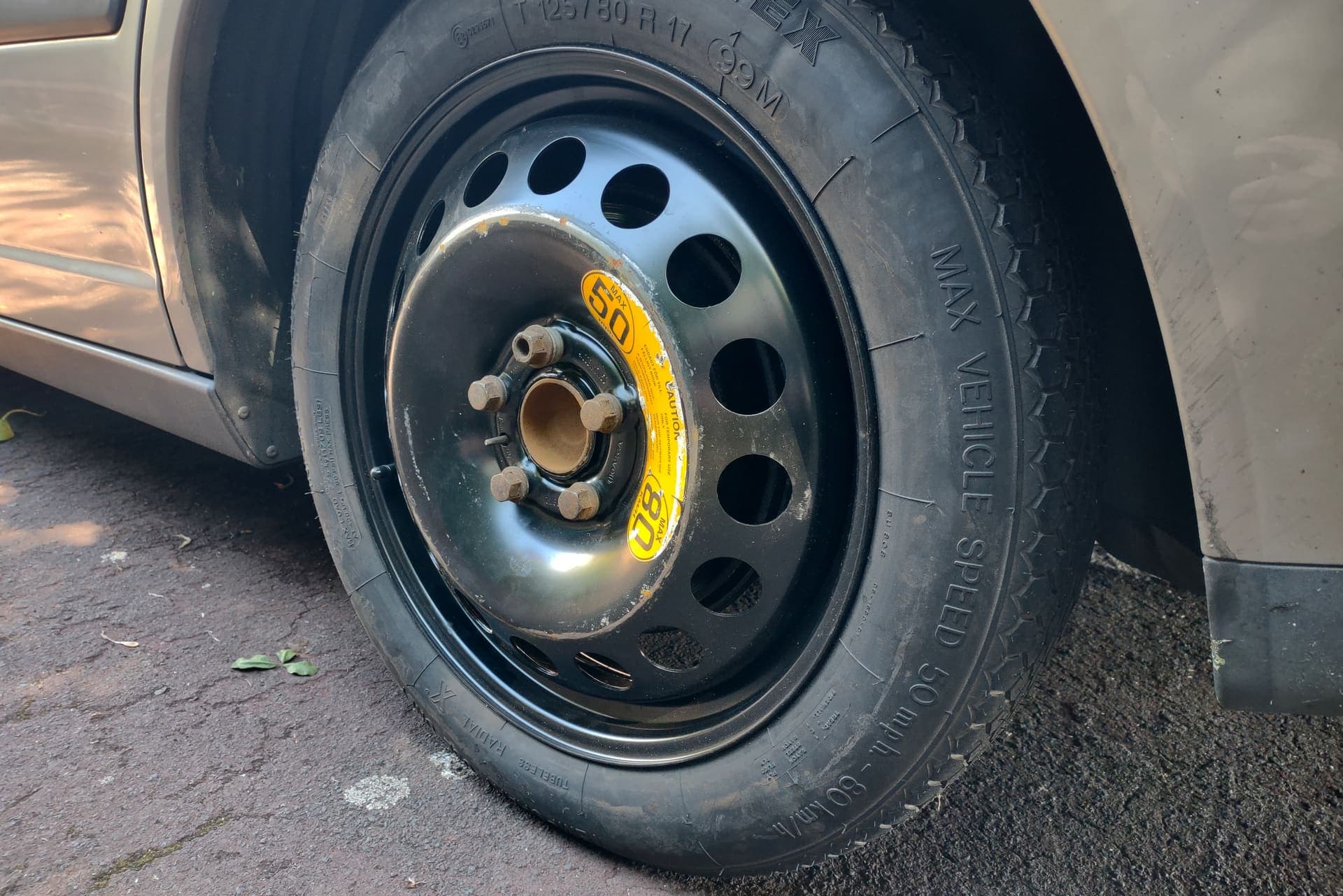
Your spare counts. A full-size spare that has been under the car since the vehicle was new is exactly as old as the car, and it is the tire you will fit at the roadside in the rain.
What ageing looks like
Get down and look at the sidewall in good light, and flex it gently with your thumbs.
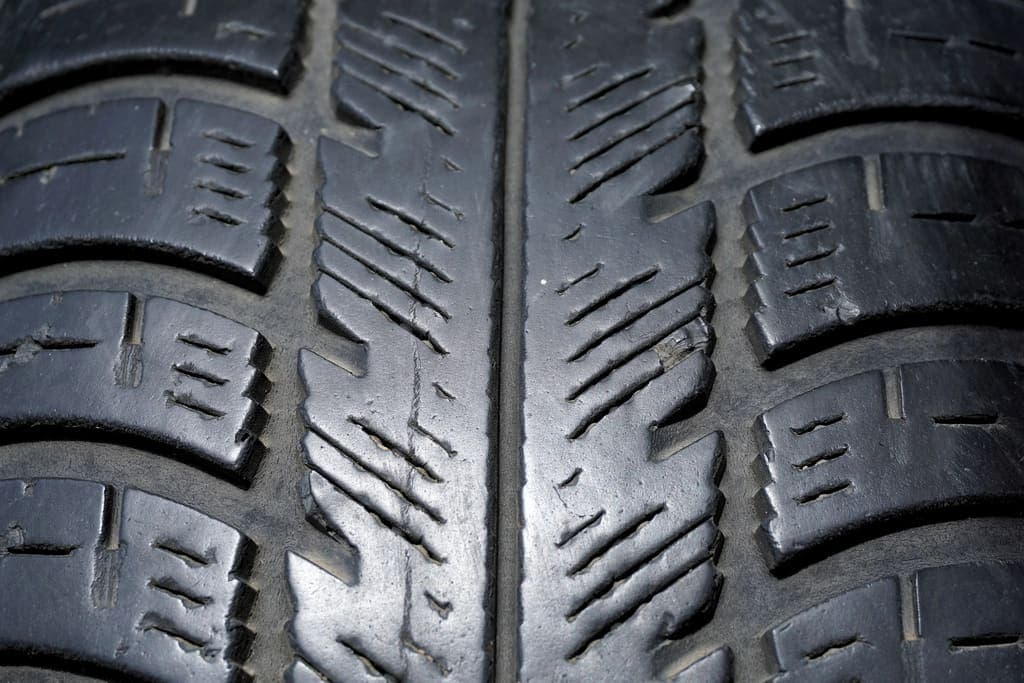
- Fine cracking in the sidewall or between the tread blocks, sometimes called weather checking or crazing
- A chalky, dull grey surface rather than a deep black
- A bulge or a soft spot anywhere on the sidewall — that one means replace it today, not soon
- Hardness you can feel; an old tire feels more like plastic than rubber
Cracks deep enough to see cord are past discussion.
Buying tires: check the date at the shop
New tires are not always new. A tire sitting in a warehouse ages the same way one on a car does, and it is entirely legal to sell stock that has been in storage for a couple of years.
Check the date code before the tires go on the car, not after. Anything more than about a year old should get you a conversation and a discount, and more than two years old is worth declining. This applies double to a bargain set found online.
Where this bites in Ohio
Two situations account for most of the aged tires we see.
The second car. A truck used for hauling a few weekends a year, a convertible driven May to September, a car kept for a teenager. Plenty of tread, barely any miles, tires from three presidencies ago.
The used car purchase. Tread depth gets checked at the sale. Date codes rarely do. It is worth thirty seconds with a flashlight before you buy, because four tires is a real number to discover a week after you took delivery.
Next time the car is up on the lift, ask us to read the date codes on all five tires. It takes a minute and it costs nothing. We check them as part of any tire service, and we will tell you plainly if the tread is fine and the rubber is not.
Filed under Tires & Wheels
+ Book an Appointment