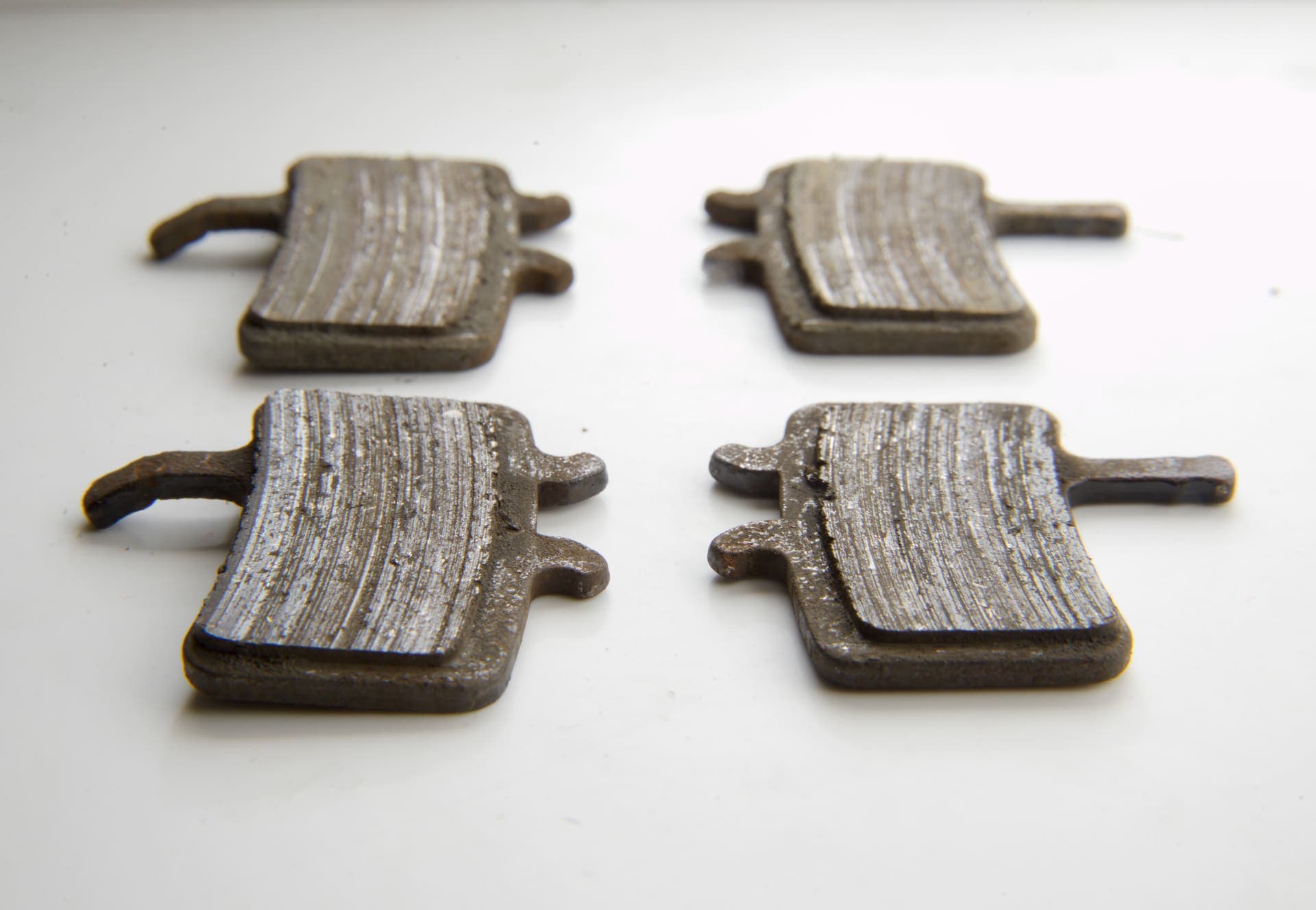
Brakes almost always warn you before they fail. Here is what each noise, smell and pedal feel actually means — and which ones mean stop driving today.
Brakes rarely fail without warning. They squeal, they grind, they pull, they shudder — and most drivers hear all of it for weeks before booking anything. The problem is that each of those symptoms costs a different amount to fix depending on how long you wait.
Here is how to read what your car is telling you.
1. A high squeal that stops when you brake
That is the wear indicator: a small metal tab built into the pad that starts touching the rotor when the friction material gets thin. It is doing exactly what it was designed to do.
At this stage you almost certainly need pads only. Rotors are usually still within spec. This is the cheapest possible moment to deal with it.
2. A deep grinding noise
The pad material is gone and metal is now cutting into the rotor. Every stop is scoring a groove into a part that was fine a month ago.
Grinding turns a pad job into a pad-and-rotor job, and in some cases a caliper job too. If you hear grinding, book this week.
3. The car pulls to one side when you brake
One side is doing more work than the other. Usually a sticking caliper slide pin or a collapsed brake hose that lets pressure through in one direction but not back.
This is a safety issue in the wet, and it wears one pair of pads twice as fast as the other.
4. The pedal pulses or the wheel shakes
Rotor thickness variation — commonly called warping, though it is more often uneven deposits of pad material. You feel it most at highway speeds coming down to a stop.
Sometimes rotors can be machined flat again. Sometimes they are already too thin to cut safely. We measure before we quote.
5. The pedal sinks slowly toward the floor
Stop driving it. A pedal that sinks under steady pressure means fluid is escaping somewhere — a hose, a line, a caliper seal, or a failing master cylinder.
There is no version of this that is safe to leave until next payday. Call us and we will tow it in.
6. A hot chemical smell after driving
Overheated brakes, usually because something is dragging. A seized caliper or a stuck parking brake cable can hold friction on constantly, cook the fluid, and cause brake fade exactly when you need to stop hardest.
What a proper inspection looks like
A shop should not quote brakes from the parking lot. Ours measures:
- Pad thickness on all four corners, in millimetres
- Rotor thickness against the manufacturer's minimum stamped on the hub
- Rotor runout with a dial gauge
- Caliper slide pin movement and boot condition
- Hose condition and fluid moisture content
Then you get numbers, not adjectives. If your pads are at 7mm we will tell you to come back in six months rather than sell you a job you do not need yet.
What it costs to wait
| You act at | Typical job | | --- | --- | | First squeal | Pads | | Early grinding | Pads and rotors | | Heavy grinding | Pads, rotors, possibly a caliper | | Pedal sinking | Hydraulic repair plus everything above |
The pads are the cheap part. Everything downstream of ignoring them is not.
If any of the six signs above sound familiar, book a brake inspection — or just call the shop and describe the noise. We can usually tell you over the phone how urgent it is.
Filed under Brakes & Safety
+ Book an Appointment