A misfire that starts as a slight stumble at a red light ends as a ruined catalytic converter. The gap between those two repairs is a factor of ten, and a few hundred miles.
A misfire is one cylinder failing to do its job. The engine keeps running on the others, so the car still drives, and the natural response is to keep driving it.
That decision is what turns a spark plug into a catalytic converter.
Why the flashing light means stop
There is an important distinction on the dashboard that a lot of drivers have never been told.
A steady check engine light means a fault is stored. Get it looked at soon, but you can finish your drive.
A flashing check engine light means an active misfire severe enough to damage the catalytic converter. Reduce speed and get off the road.
The mechanism is straightforward. When a cylinder misfires, its fuel does not burn in the engine. It goes out the exhaust valve as raw fuel and burns inside the catalytic converter instead, which is not built for it. Cat temperatures go from around 1,200°F to well over 1,800°F, and the ceramic substrate melts and collapses.
A set of spark plugs is a modest bill. A catalytic converter is often ten times that, sometimes more. That is the entire reason the light flashes differently.
What you feel
- A shake or shudder at idle, most obvious stopped at a light with the car in drive
- Hesitation or stumble on acceleration
- Loss of power, particularly noticeable pulling up a grade
- A rhythmic popping or puffing from the exhaust
- Fuel economy dropping off
- A smell of unburned fuel
Early misfires often come and go — worse when cold, worse in the rain, fine on the highway. Intermittent does not mean minor. It means the fault has not fully developed yet, which is the best time to find it.
The three things a cylinder needs
Every misfire diagnosis comes down to which of three ingredients is missing.
Spark. The most common. Worn spark plugs are the usual answer and are genuinely inexpensive. Failed ignition coils are next — most modern engines have one coil per cylinder, so a single coil failure produces a single-cylinder misfire, which is a very clean diagnostic picture. Old-style plug wires break down internally and arc, most noticeably in damp weather.
Fuel. A clogged or failed injector on one cylinder. Less common than ignition faults but not rare, especially on direct-injection engines with high mileage.
Compression. The expensive category. A burnt valve, worn rings, a failed head gasket, or a jumped timing belt. A compression test separates this from the other two quickly, and it is the test that determines whether you are talking about a repair or a decision about the car.
Why the code is only the start
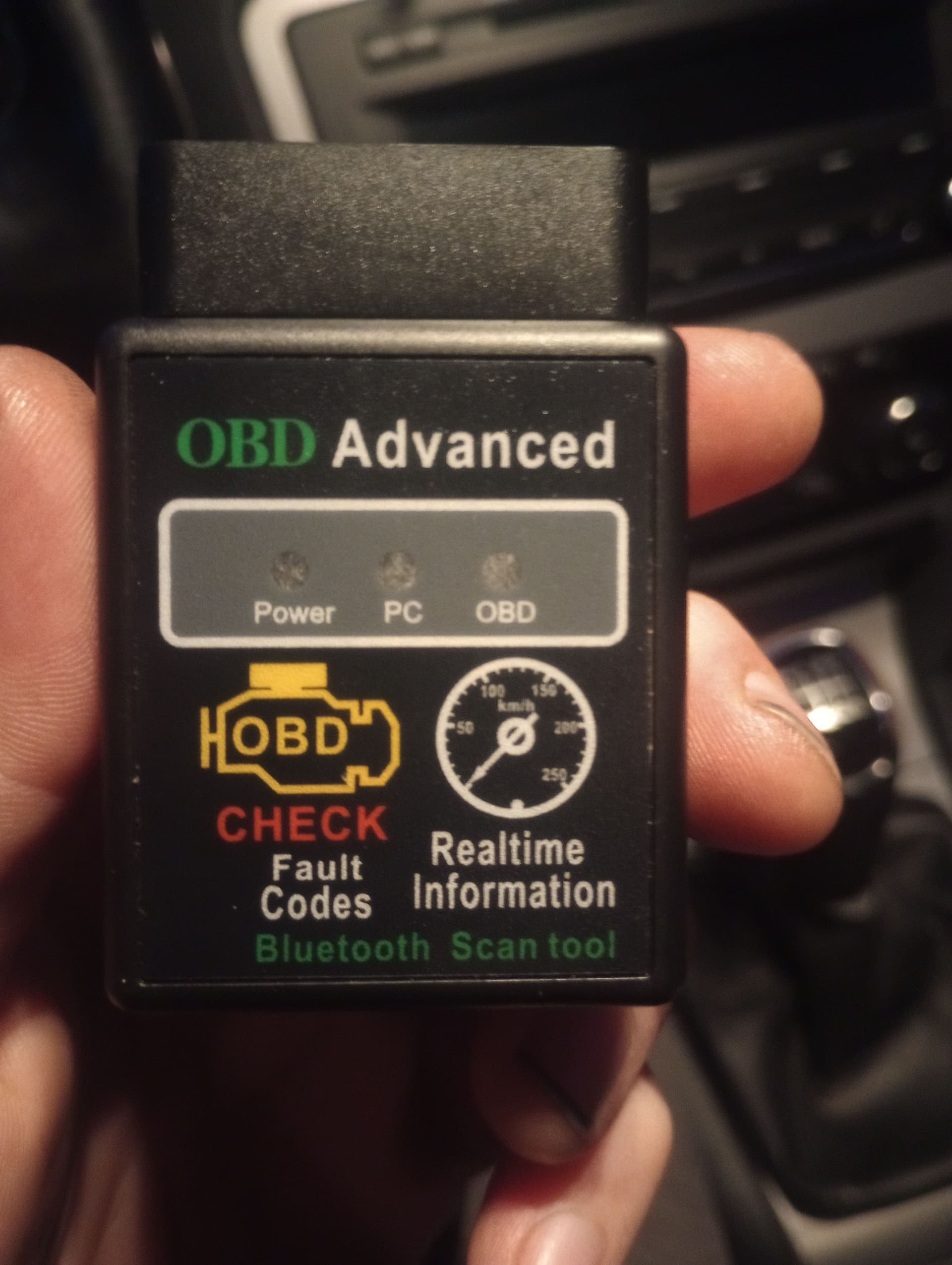
A P0303 tells you cylinder 3 is misfiring. It does not tell you which of the three ingredients is missing, and buying parts based on the code alone is how people end up with a new coil, new plugs, a new injector and the same misfire.
The efficient sequence is:
- Read the code and the freeze frame — the conditions when it set. Cold or warm, idle or load, and whether it is one cylinder or several
- Swap the coil with a neighbouring cylinder and clear the code. If the misfire follows the coil to the other cylinder, the coil is bad. This is a five-minute test that settles the most common cause outright
- Inspect the plug from that cylinder. Its condition is a readable record — oil fouling, coolant deposits, overheating, wrong gap
- Compression and leak-down if spark and fuel check out, which identifies mechanical problems and where the pressure is escaping
When several cylinders misfire at once
A misfire across multiple cylinders, or a random misfire code with no specific cylinder, usually points somewhere other than the ignition parts.
A vacuum leak leans out the mixture across the whole engine. Cracked intake hoses and perished gaskets are common on higher-mileage cars, and this often shows up as a rough idle that smooths out at higher RPM.
Fuel delivery — a failing pump or a badly clogged filter — starves everything at once, usually worst under load.
A restricted exhaust, typically a catalytic converter already collapsing internally, chokes the engine and causes misfires as a downstream symptom of the earlier problem.
The cost of waiting
The unusual thing about misfires is how sharply the price scales with time.
Fix it in the first week: usually plugs, a coil, or both.
Fix it in the second month: the same parts, plus a catalytic converter that has been cooking, plus the oxygen sensors that were poisoned along the way.
Nothing else on a car has quite that ratio. If the car is shaking at idle, get the code read now, not after the weekend. We diagnose misfires by testing the circuit rather than replacing parts in order of price, and most of them end up being the cheap answer.
Filed under Engine Care
+ Book an Appointment