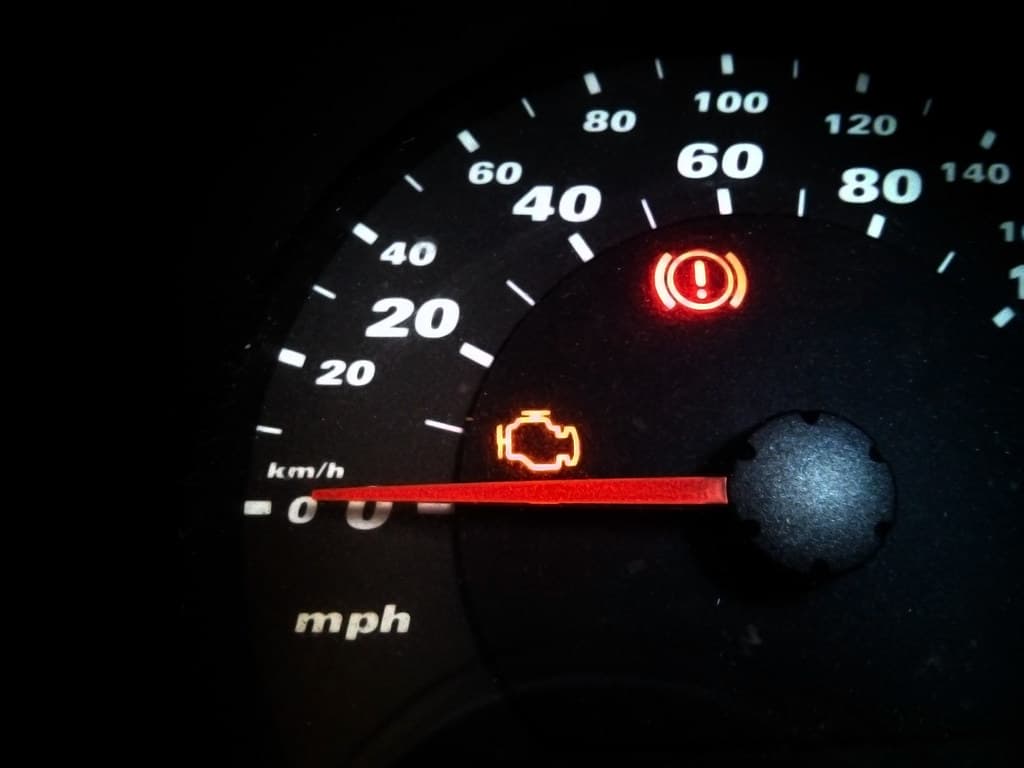

Both leave you stranded in the same parking lot, and the free counter test that sends most people home with a battery misses the real fault more often than you would think.
A dead car tells you almost nothing about why it is dead. The battery stores the energy; the alternator replaces it. When either one fails you end up in the same place — in a parking lot, on the phone.
Buying the wrong one is expensive, because the car dies again a week later and the first part was never the problem.
The single most useful clue
Did a jump start fix it, and did the car keep running after the cables came off?
If you jump the car and it runs happily for the rest of the day, the alternator is doing its job. The battery could not start the engine, but once the engine was running the alternator took over. That points at the battery.
If you jump the car, it starts, and then it dies within a few minutes — or dies the moment the cables come off — the alternator is not generating. The battery had just enough left to accept a jump, and nothing is replacing what the engine is consuming.
That one observation separates the two cases more reliably than anything you can do with a meter in a driveway.
The dashboard tells you more than the battery light
The battery-shaped warning light is badly named. It does not mean "your battery is low." It means charging system voltage is out of range — which is almost always the alternator, the belt driving it, or the wiring between them.
Watch for these while driving:
- Headlights that dim and brighten with engine speed
- Dash lights flickering at idle and steadying when you rev
- The radio cutting out or resetting
- Power windows moving slower than normal
- A whining or growling noise that rises with RPM
Those are all symptoms of a system running on falling voltage. A weak battery does not cause them. A failing alternator does.
Symptoms that point at the battery instead
- Slow, laboured cranking that gets worse in cold weather
- A single loud click and nothing else
- Fine after a jump, fine for weeks, then dead again after sitting a few days
- Everything works normally once the engine is running
The pattern to notice is that battery problems show up at startup, and alternator problems show up while driving.
Why the free parts-store test misses things
Most counter tests measure resting voltage, run a brief load test with the engine off, then check voltage at the terminals with the engine running.
That catches an obviously dead battery and an obviously dead alternator. It routinely misses three things.
An alternator with a failed diode. It still produces voltage, so it passes a basic check, but it is pushing AC ripple into a DC system. That destroys batteries and causes flickering and electronic gremlins. Finding it means checking for AC volts on a DC circuit — a healthy alternator should read well under 0.1 volts AC.
A parasitic draw. Nothing is wrong with either part. Something in the car is staying awake and draining it overnight. Both components test perfectly and the car keeps dying.
A voltage drop in the cable between them. Corroded terminals, a chafed charging wire or a bad engine ground can starve a good battery of charge from a good alternator. The parts both test fine. The car does not.
The four-test sequence we run
- Resting voltage, engine off, after sitting an hour. Around 12.6V is full, 12.2V is roughly half, below 12.0V is discharged.
- Load test. Does voltage hold above about 9.6V while the battery delivers cranking current? This is the test that finds a battery holding good voltage with no capacity behind it.
- Charging voltage, engine running. Should sit somewhere in the 13.5–14.7V range. Below that the alternator is not keeping up. Above it, the regulator is overcharging and boiling the battery dry.
- AC ripple and voltage drop. Catches failed diodes and bad connections that the first three tests walk straight past.
Four measurements, about fifteen minutes, and at the end there is no guessing about which part to buy.
The one that catches everyone
If you have replaced a battery within the last year and the car is doing it again, do not buy another battery. Something is either not charging it or quietly draining it, and the second battery will die exactly the way the first one did.
Bring it in and let us test the charging system properly before you spend money on parts. A parasitic draw test is not glamorous work, but it is a great deal cheaper than a third battery.
Filed under Diagnostics
+ Book an Appointment