Clunks, whines, hums and ticks each have a short list of likely causes. Match the noise to when it happens and you are most of the way to a diagnosis.
"It makes a noise" is where every diagnosis starts and none of them end. The useful information is not the noise itself — it is when the noise happens.
Before you call any shop, answer these four questions and you will save yourself diagnostic time:
- Does it happen when the car is moving, stopped, or both?
- Does it change with engine speed, or with road speed?
- Does it change when you turn, brake, or go over bumps?
- Is it worse cold or after the car warms up?
Here is what the answers usually point to.
Clunk over bumps
Something in the suspension has play in it. In rough order of likelihood: sway bar end links, worn strut mounts, control arm bushings, ball joints.
End links are the most common and among the cheapest parts on the car. Worth checking first before anyone quotes you a full front end.
Squeal on startup that fades after a minute
Serpentine belt or belt tensioner. Glazed belts squeal cold and quiet down as they warm and grip.
Sometimes it is genuinely just a belt. Often the tensioner has lost spring pressure and the belt is a symptom.
Whine that rises with engine speed, even in neutral
Something belt-driven: alternator bearing, power steering pump, idler pulley, or the water pump.
The give-away is that it tracks engine RPM, not road speed. Rev it in park — if the pitch follows, it is under the hood, not in the drivetrain.
Hum or drone that rises with road speed
Wheel bearing or tire noise. To tell them apart, find an empty road and gently swerve side to side at a steady speed.
A bearing noise gets louder when the car leans onto the bad side and quieter when it leans away. Tire noise stays constant.
Ticking that follows engine RPM
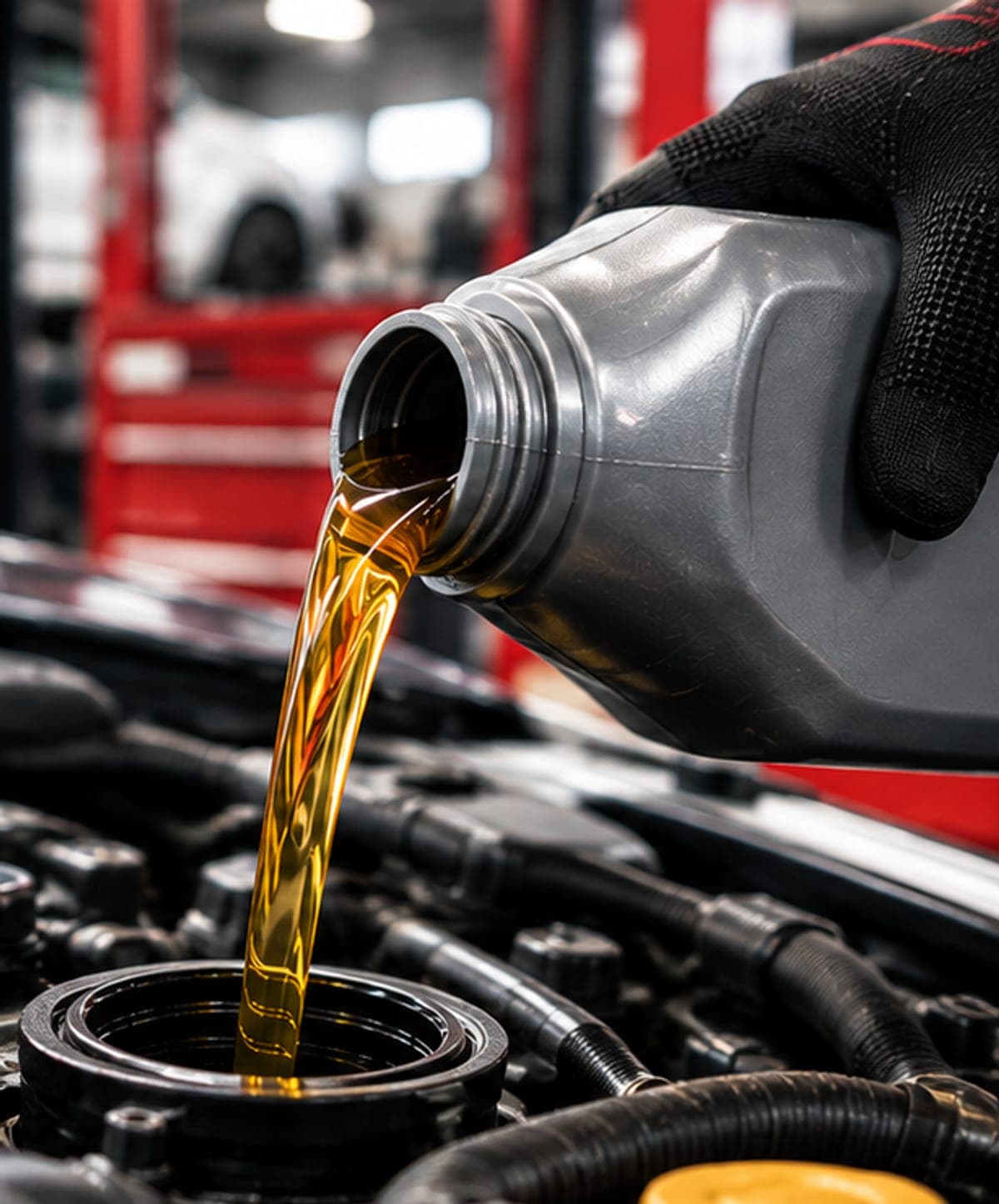
Usually valvetrain: low oil level, a sticking lifter, or a lash adjustment that needs setting. Check your oil level first — it is free.
A sharper, faster tick that gets worse under load can be an exhaust manifold leak, which sounds remarkably similar when cold and often quiets down as metal expands.
Grinding or scraping when braking
Covered in more depth in our brake guide, but short version: friction material is gone, book it this week.
Rhythmic thumping that matches wheel rotation
A tire problem — a separated belt inside the tire, a flat-spotted tire, or a stone stuck in the tread. The tell is that the rhythm speeds up exactly with road speed and does not care about engine RPM.
Get this looked at quickly. Internal tire separation is a blowout waiting for a highway.
Knocking from deep in the engine, load-dependent
Stop driving. A rod knock or a spun bearing is the one noise on this list where continuing to drive turns a repair into an engine replacement.
Clicking when turning, sharp lock
CV joint on the outer axle. Almost always accompanied by a torn CV boot slinging grease around the inside of the wheel.
Record it
Modern phones record audio well enough to diagnose from. If the noise is intermittent, get a clip — it beats trying to reproduce a phantom noise on a test drive.
Bring the recording, tell us when it happens, and book a diagnostic. Half the work is already done.
Filed under Diagnostics
+ Book an Appointment